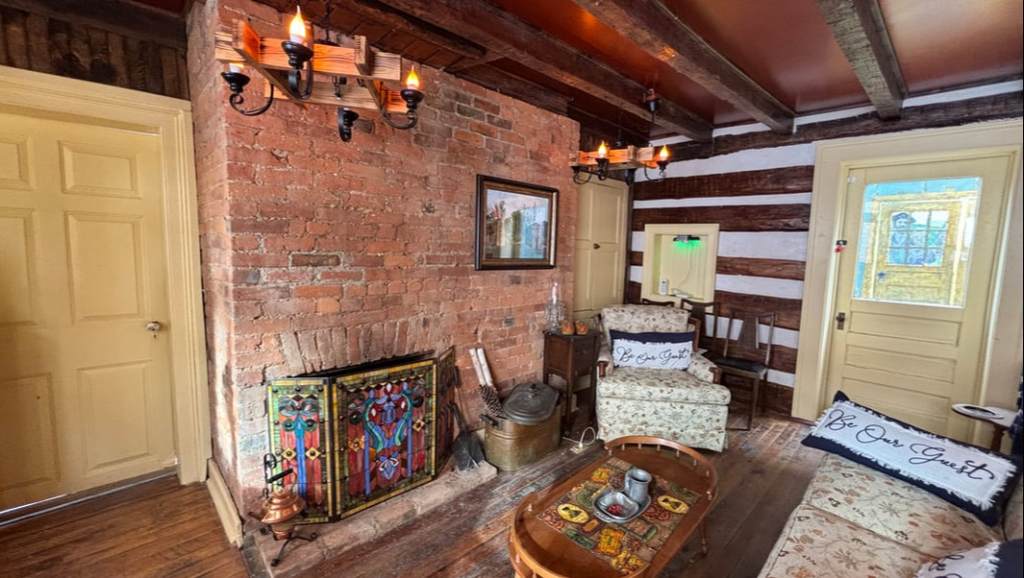
Step Inside a 1758 Landmark
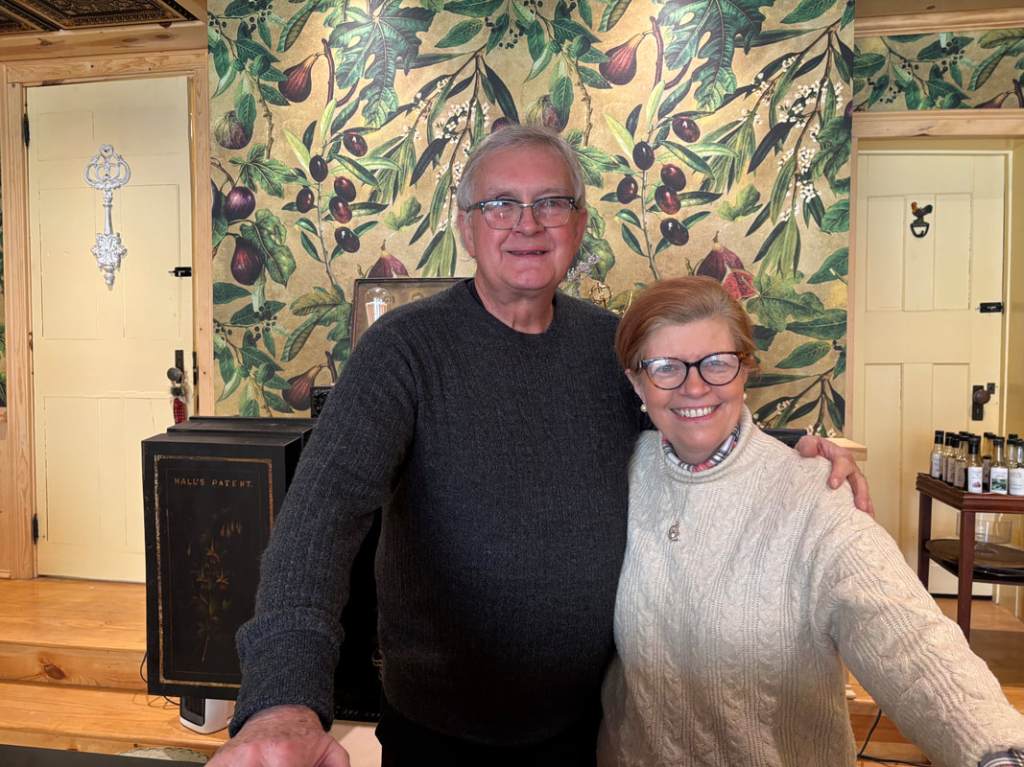
Walking into Peppercorn Market at 111 S. Juliana St. in downtown Bedford, Pennsylvania, you might think you’re simply stepping into a shop to find everything you need for a charcuterie board: cheeses, balsamic vinegar, jams, crackers, or olive oils. Owners Tyna Walker-Lay or her husband, Patrick, will likely greet you with delicious samples of their products.
But take a closer look around, and you’ll notice framed walls, steps leading into a cellar, and a window that doesn’t face outside. Clearly, this charming market has a rich history.
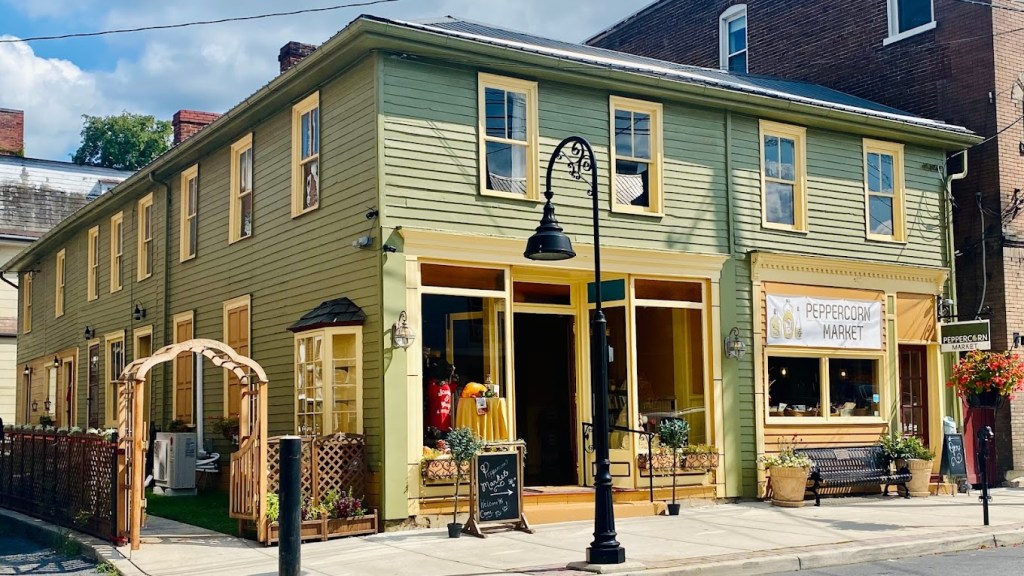
Justin and I had visited Peppercorn Market many times before, and one day, Tyna asked if we had a moment to learn about the building’s history. We said yes, and she led us into what they call the “Sacred Space,” a preserved room showcasing the site’s long history.
We knew that when we had more time, we needed to come back and learn even more about this historic landmark.
Tyna told us that a little over five years ago, they decided to knock down a wall in Peppercorn Market to create more space for the store. During the renovation, they discovered the building had a hidden story to tell.
After consulting archaeologists, they determined the structure dates back to 1758. It originated during the French and Indian War and was most likely used as an armory for Fort Bedford.
BRITISH HALF-TIMBER CONSTRUCTION
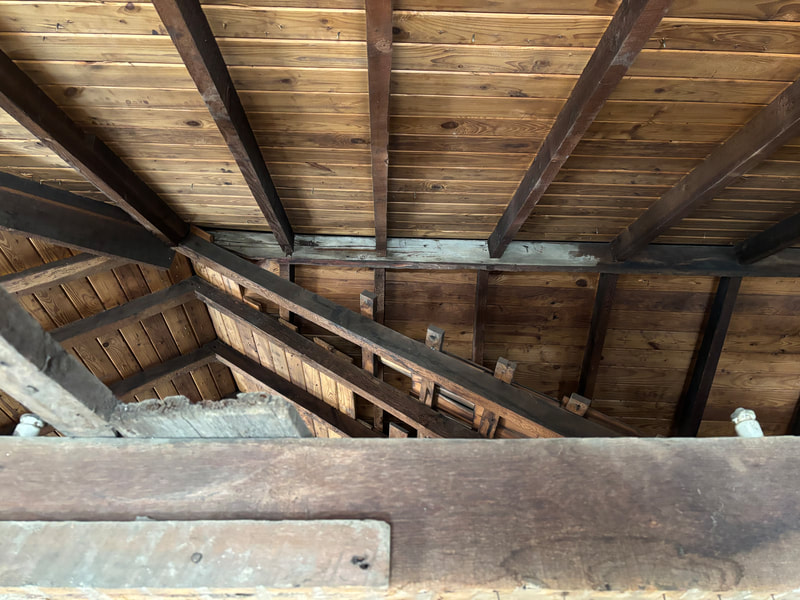
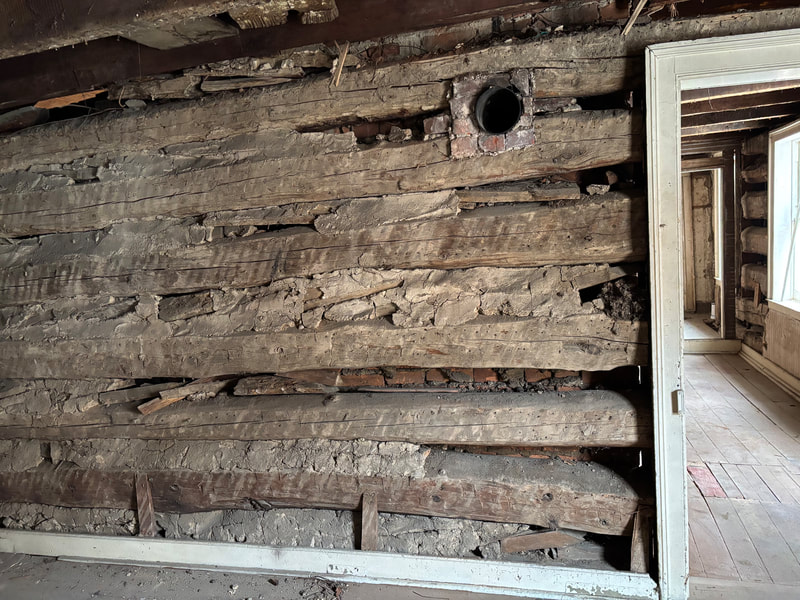
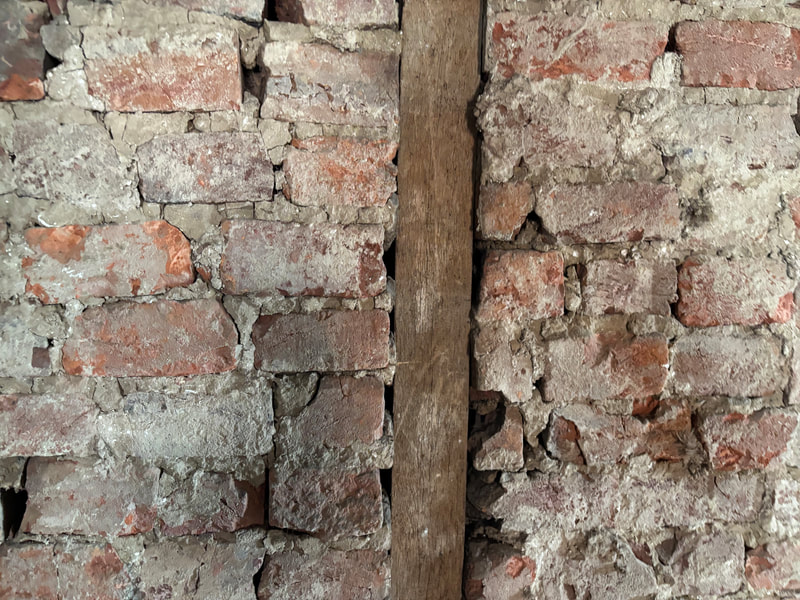
The building was constructed in a British half-timber architectural style, which was popular in the 1700s. British half-timber construction uses wooden timbers with the spaces between them filled with materials such as bricks or other substances.
Tyna even brought in archaeologists from Temple University to radiocarbon date the materials, confirming the structure dates back to 1758. This suggests the building could be the only remaining structure west of the Susquehanna River from the French and Indian War, also known as the Seven Years’ War..
She also enlisted local historian Larry D. Smith to analyze the building and piece together its history. Smith has written a book, The Fortified Bedford House, which provides a deeper look into this piece of American history. If you’re interested in learning more, purchasing the book is a great way to support the preservation of the building.
Tyna has done an outstanding job preserving and showcasing the building’s history in both the “Sacred Space” and the shop.
I’ll highlight a few key details here, but I encourage you to visit Peppercorn Market in Bedford, Pennsylvania, and experience it for yourself!
THE SACRED SPACE
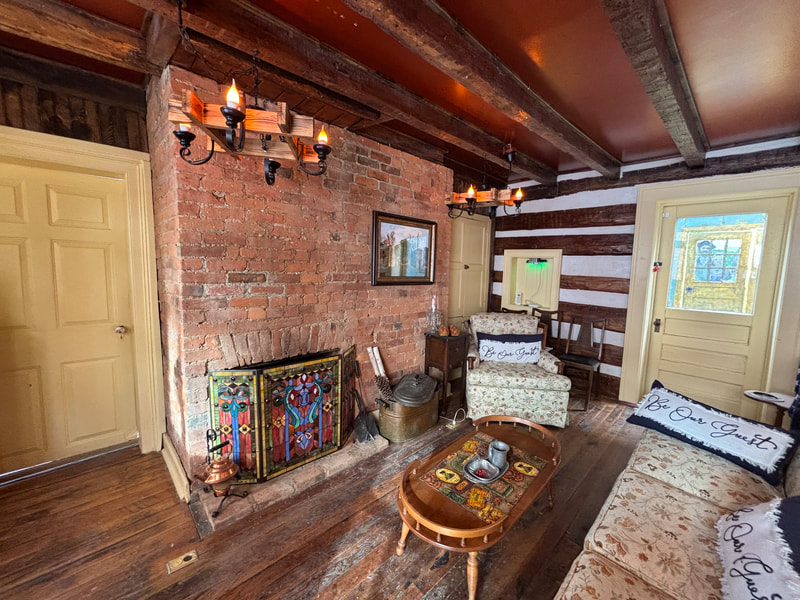
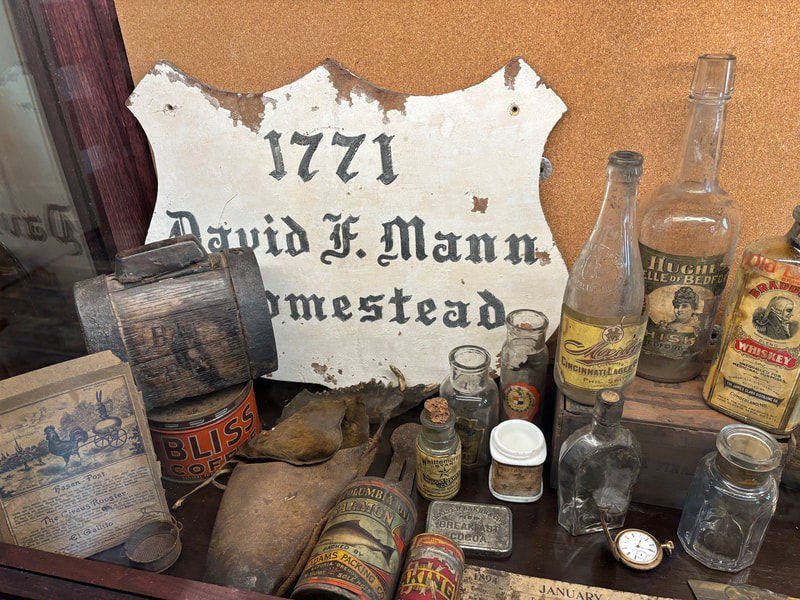
In the “Sacred Space,” you are transported back in time to see how the building has evolved through its long and storied history. Not only can you observe the different architectural styles used over the centuries, but Tyna has also curated numerous artifacts that were either discovered in the building or collected and returned to their rightful place.
If you visit when the fireplace is lit, the room feels warm and inviting—an ideal setting to learn about more than 260 years of history. Over the years, this building has served many purposes, from an armory, to a courthouse, a post office, and even multiple jewelry stores.
Talented artists have also helped recreate missing elements, giving visitors a more complete glimpse into the past.
THE WALLPAPER
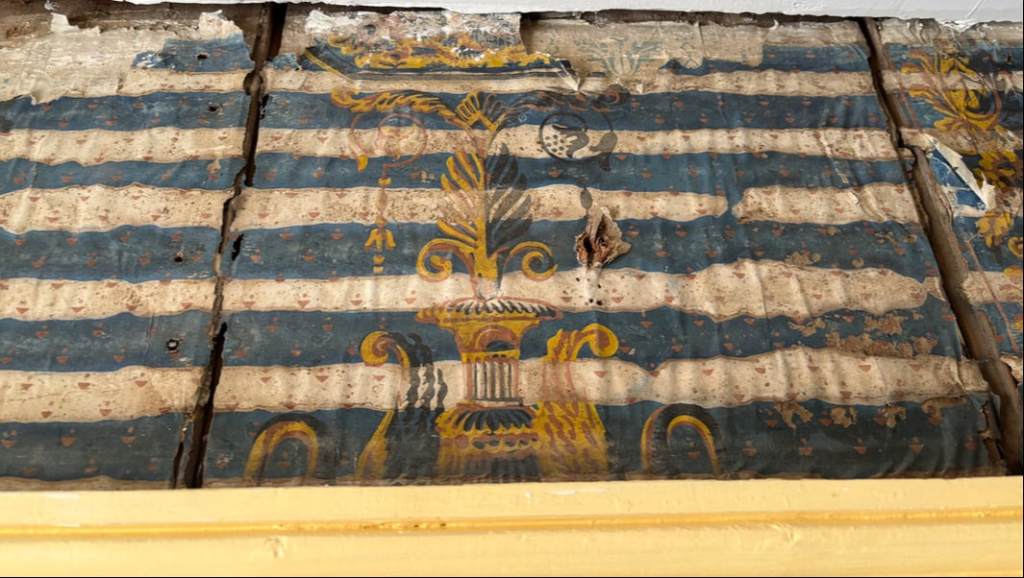
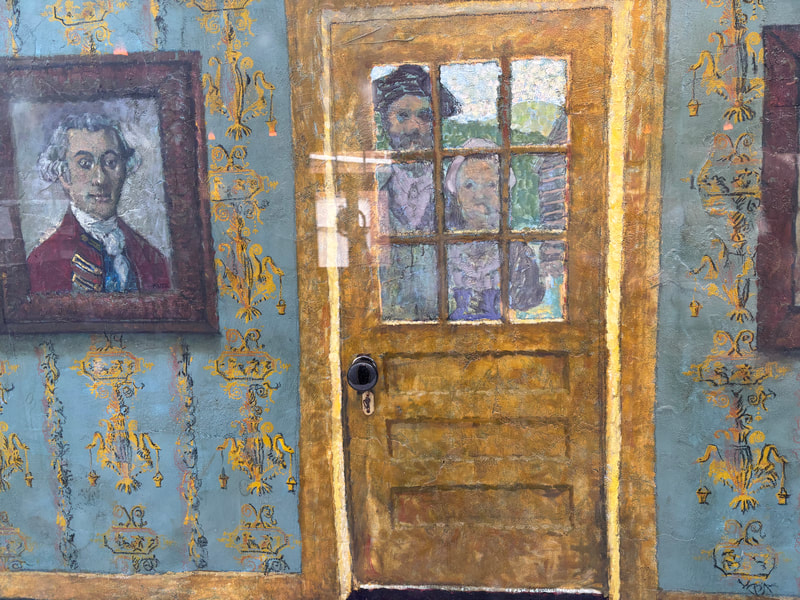
I found the blue and gold historic wallpaper absolutely stunning. An artist even painted a representation of what it would have looked like in its full glory.
I love that some of the original wallpaper remains intact on the walls as you enter the “Sacred Space,” and additional pieces are framed for visitors to admire. Experts believe the wallpaper was made in France and may date back to the late 1700s. It was discovered hidden behind plaster, which may explain why it now appears to have stripes.
FRAMED HAINES LETTER
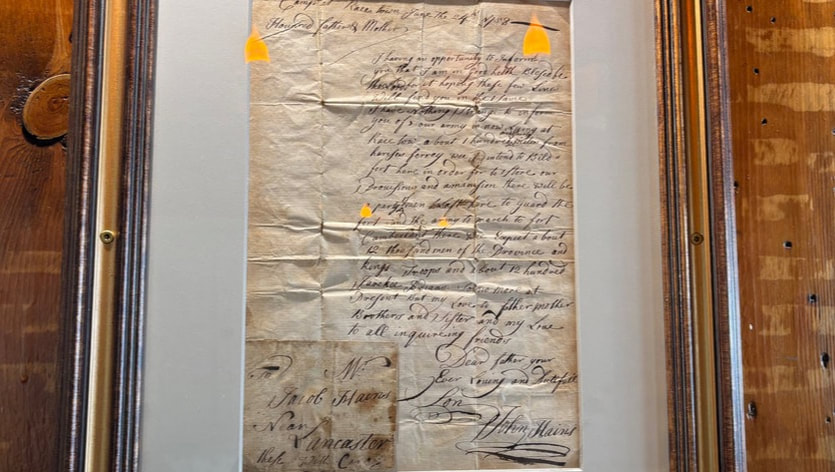
While antiquing in California, a couple discovered a letter bearing their last name, Haines. Realizing it wasn’t connected to their family, they contacted Larry Smith, historian and president of Friends of the Fortified Bedford House, as the letter appeared to be linked to the Forbes Expedition.
The letter details the construction of a site for storing ammunition and housing provisions—what would eventually become Fort Bedford. It was written on French cloth with silk threads, dated July 24, 1758, and signed by John Haines. Sadly, John never made it home, but the letter now rests in the “Sacred Space,” where visitors can admire this remarkable piece of history. The letter’s journey back to Bedford is truly extraordinary!
NINE OVER SIX WINDOW PANES
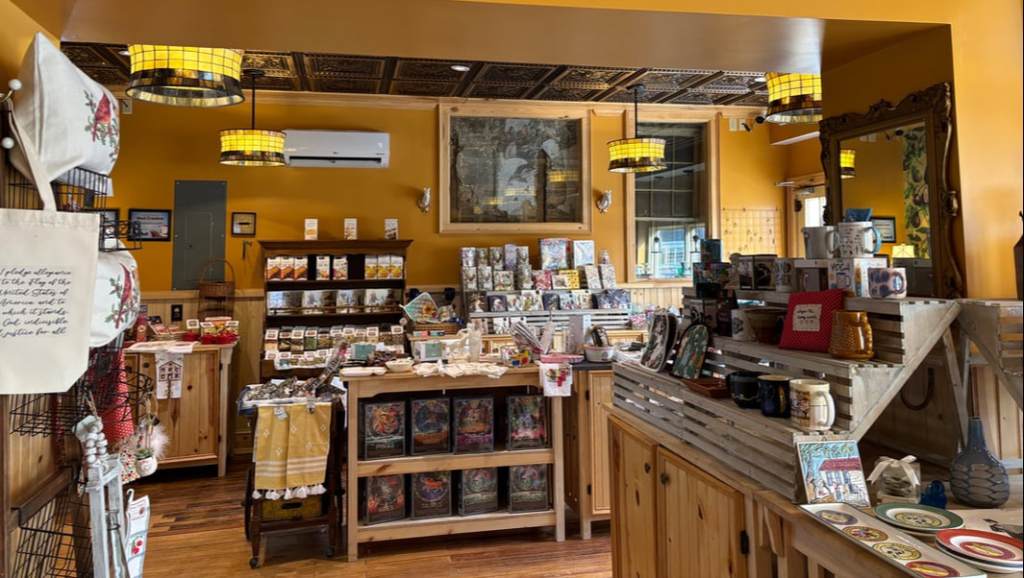
In the store, you’ll notice windows that don’t look outside. Tyna preserved them because they showcase a unique style popular in the early 1800s, known as nine-over-six panes.
By the 1820s, this distinctive window style was not used as much.
BRICK FIREPLACE
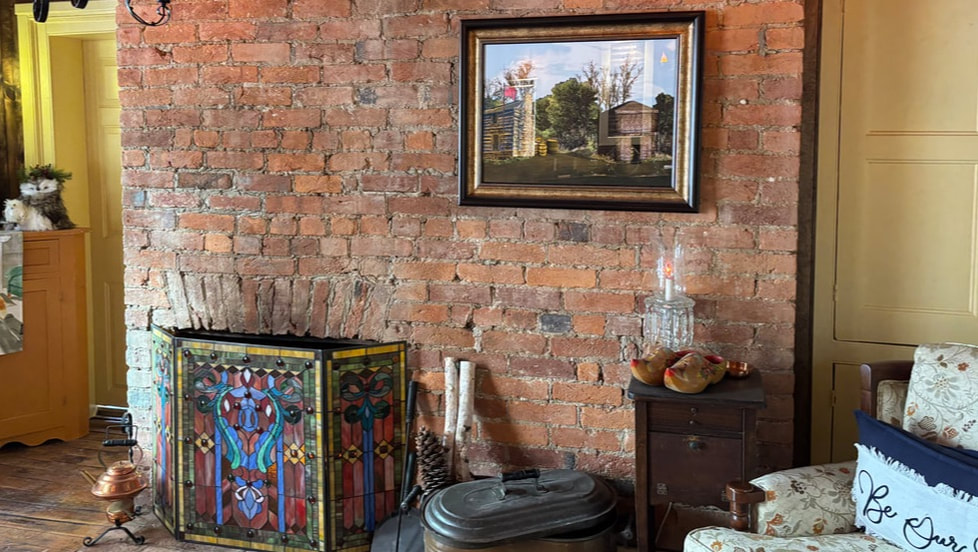
The brick fireplace is marvelous, keeping the “Sacred Space” warm during the winter. Tyna even found a gorgeous stained-glass fireplace cover that complements the building’s stained-glass windows, tying the space together beautifully.
TIMELINE OF 111 SOUTH JULIANA STREET
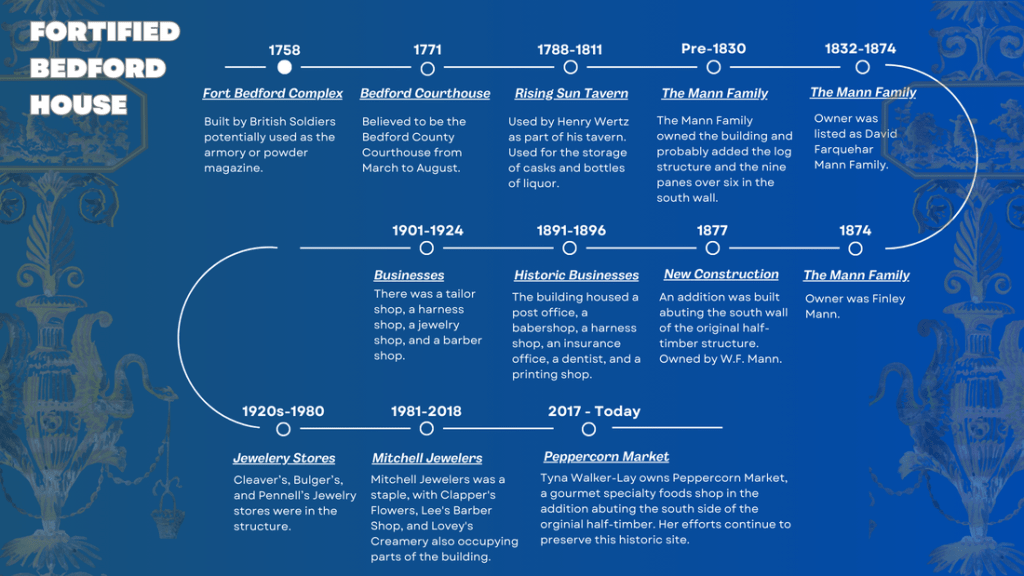
FORTIFIED BEDFORD HOUSE & PEPPERCORN MARKET
If you’d like to support this historic building and its rich ties to American history, consider donating to the Friends of Fortified Bedford during your visit. Your contribution will help preserve this remarkable site, and donations are tax-deductible. As a thank-you, Larry Smith will mail a beautiful gold-seal certificate of contribution to donors who provide an address.
You can click here to donate to the fundraiser.
For more details, visit fortifiedbedfordhouse.com or check out the Fortified Bedford House Facebook page.
Peppercorn Market’s hours vary by season. Their current winter hours are 10 a.m. to 5 p.m. daily, except Sundays, when they’re open 11 a.m. to 5 p.m.
You can also shop anytime online at peppercornmarket.com.
 Wx Shield
Leave a comment