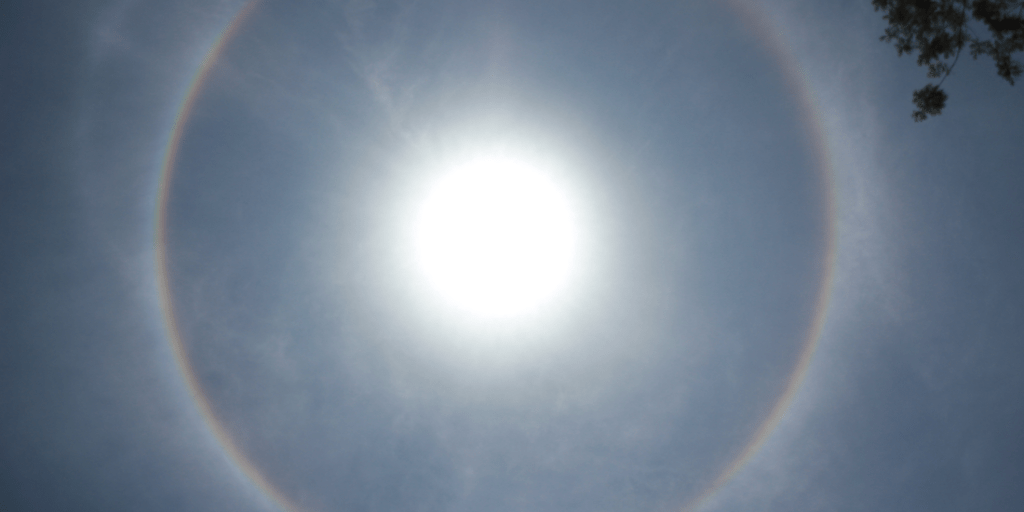
RINGS AROUND THE SUN OR MOON ARE CALLED HALOS
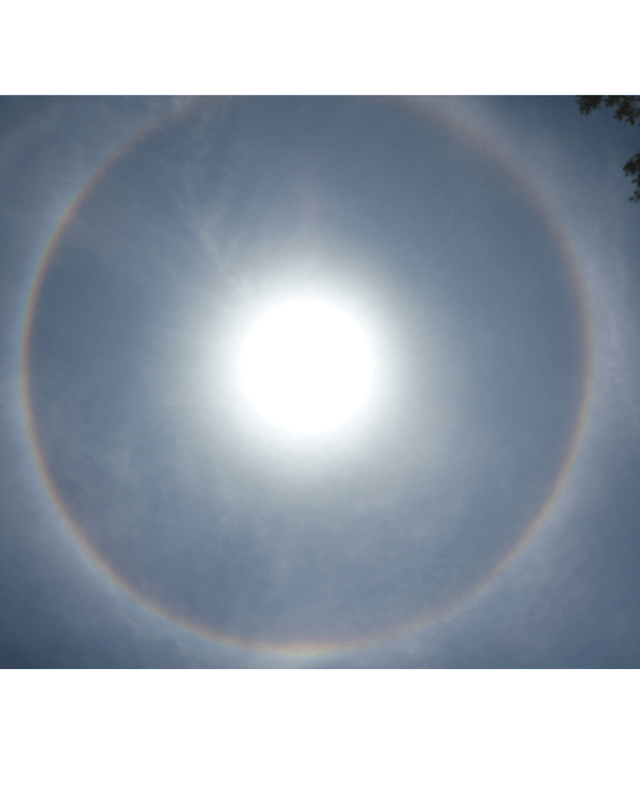
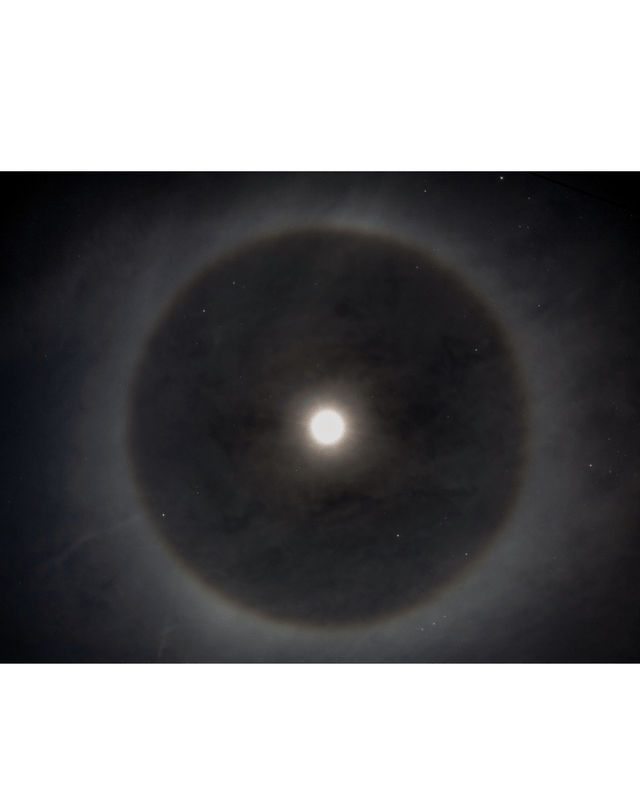
From time to time, I get these beautiful photos of 22-degree sun and moon halos sent to me. Just a few weeks ago, Danielle in Clearfield captured this beautiful one! Thanks Danielle!
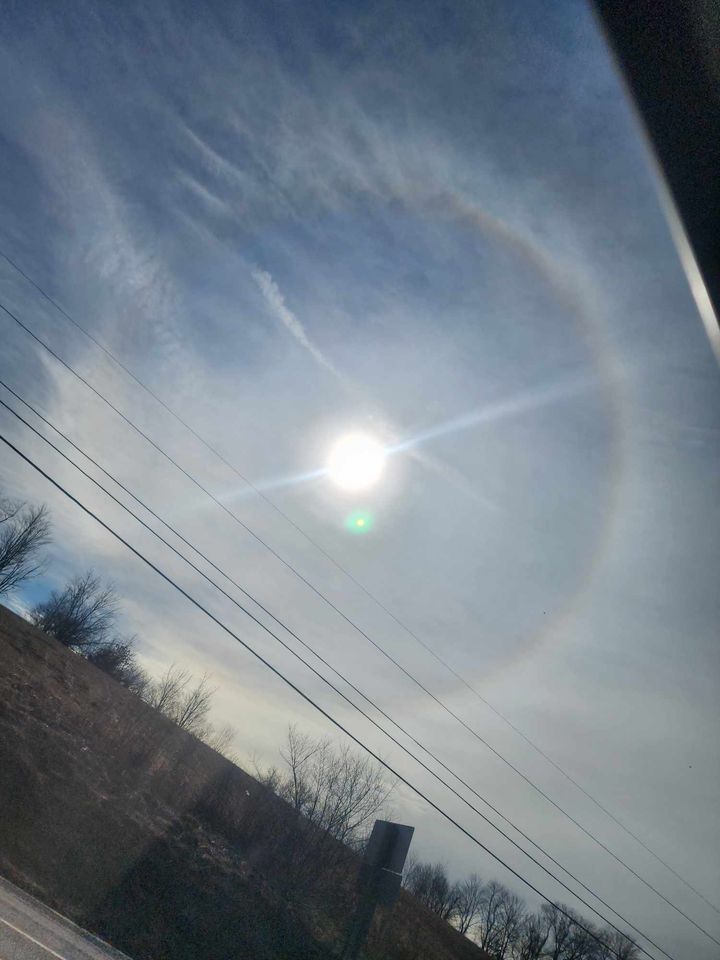
So let’s get into the science behind this optical phenomenon in the sky! To understand how these forms, we need to start with the basics of light!
LIGHT SCIENCE
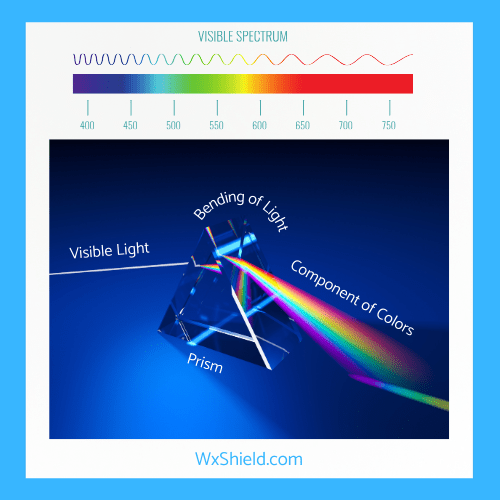
Light is electromagnetic radiation. Light moves in wavelengths. The human eye cannot see all the light on the electromagnetic spectrum. Humans can see wavelengths between 380 to 700 nanometers. This chunk we can see; we refer to this as visible light.
Visible light is made up of the colors of the rainbow! Remember ROY G BIV? The colors that make up the rainbow are Red, Orange, Yellow, Green, Blue, Indigo and Violet.
When we see visible light, we typically see it as a yellow or white color, but in actuality it is made up of that rainbow of color! If you put light through a prism, it will bend the light and you will see the full rainbow of color! This shows that each color travels at a different wavelength.
When light is bent through and object like a prism, we call it refraction.
DIFFERENCE BETWEEN REFRACTION & REFLECTION
Refraction is different compared to reflection.
Reflection is when light travels and bounces off a material into a different direction. An example of reflection is looking at yourself in the mirror.
Refraction is when light travels through a material and the speed changes which leads to the light being bent. An example of refraction is a rainbow in the sky. Or stick a pencil in water and noticing how, when you look through it, the image doesn’t match up and looks broken.

22 DEGREE HALOS
So what does this have to do with the halos in the sky? Everything! The sun is the most dominant form of visible light we see each day. As the sun lights up the Earth, it travels through the air and sometimes through clouds.
The clouds we want to focus on, will be the ones that are way high up in the sky. These clouds are called cirrus clouds. Cirrus clouds are wispy clouds that are above 20,000 feet up in the sky. Because they are so high up in the atmosphere, they are not made up of water droplets, but of ice crystals!

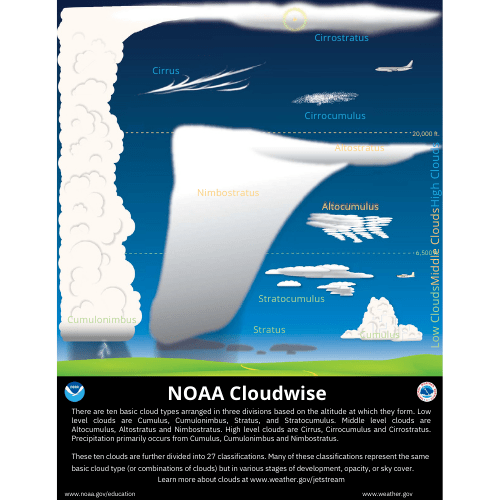
If they are cirrostratus clouds, they will have hexagonal shaped ice crystals. Basically, these ice crystals act as prisms in the sky, and when the sunlight travels through these ice crystals, the light is bent (refracted) leading to these 22 degree halos! Usually they look white/yellow, but in rare cases they can have a rainbow look from the refraction.
When the light is bent in these hexagonal ice crystals, it usually forms 22 degrees from the center of either the sun or the moon, regardless of where they are in the sky.
According to the World Meteorological Society, 22 degree halos, are the most observed halo optical phenomenon in the sky. (We will take a look at some of the other ones in the upcoming weeks)
WEATHER LORE
Have you ever heard the old saying, “halo around the sun or moon, precipitation will come soon.” This one actually can prove to be true! We typically see cirrus, or cirrostratus clouds before a warm front moves in bringing in precipitation!
There are so many cool things to see in the sky! If you have any more questions about 22 degree sun and moon halos or any other weather related science questions, feel free to ask! I’d love to answer them : ) Also, keep sending cool photos my way!
 Wx Shield
Leave a comment