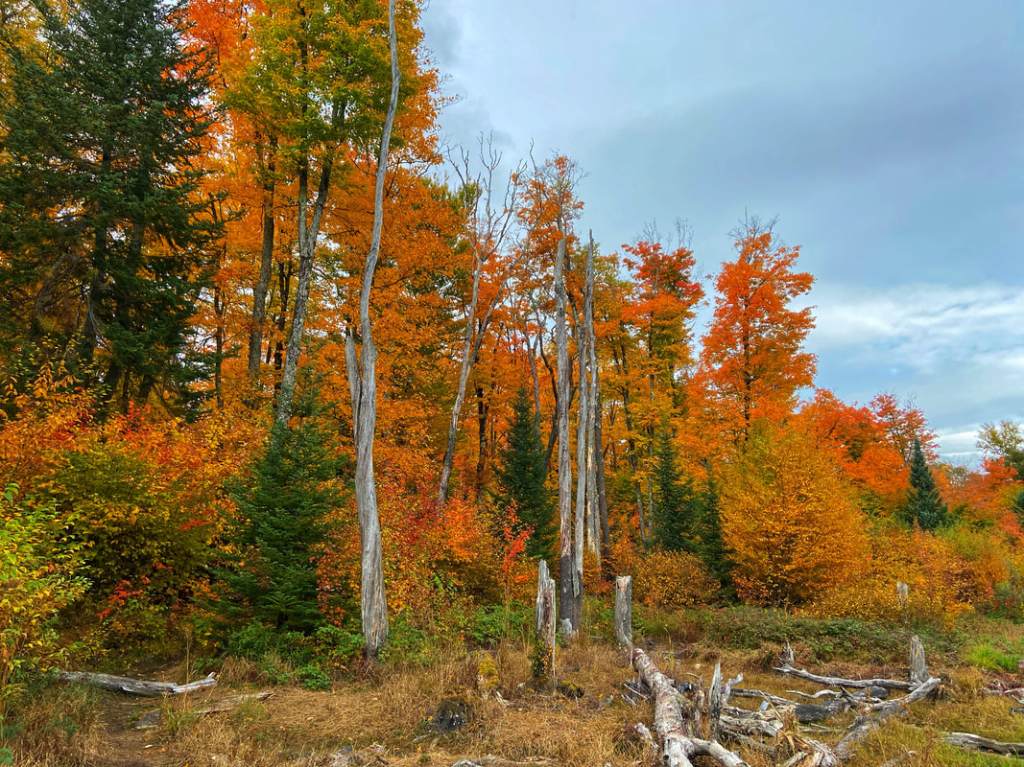
DISCOVER WHY & WHEN IT’S THE BEST TIME TO VIEW FOLIAGE
We are now in the fall season, and if you’ve ever wondered why the leaves turn colors, I’ve got answers! Let’s dig into the science!
Sunlight provides energy for plants. Trees produce a pigment called chlorophyll, which absorbs sunlight to transform carbon dioxide and water into food. Chlorophyll absorbs red and blue light, which is why it appears green!
During the fall, with fewer daylight hours and less sunlight, chlorophyll production slows and eventually stops. As chlorophyll fades, other pigments in the trees become visible because the green pigment is no longer present.
LEAF PIGMENT
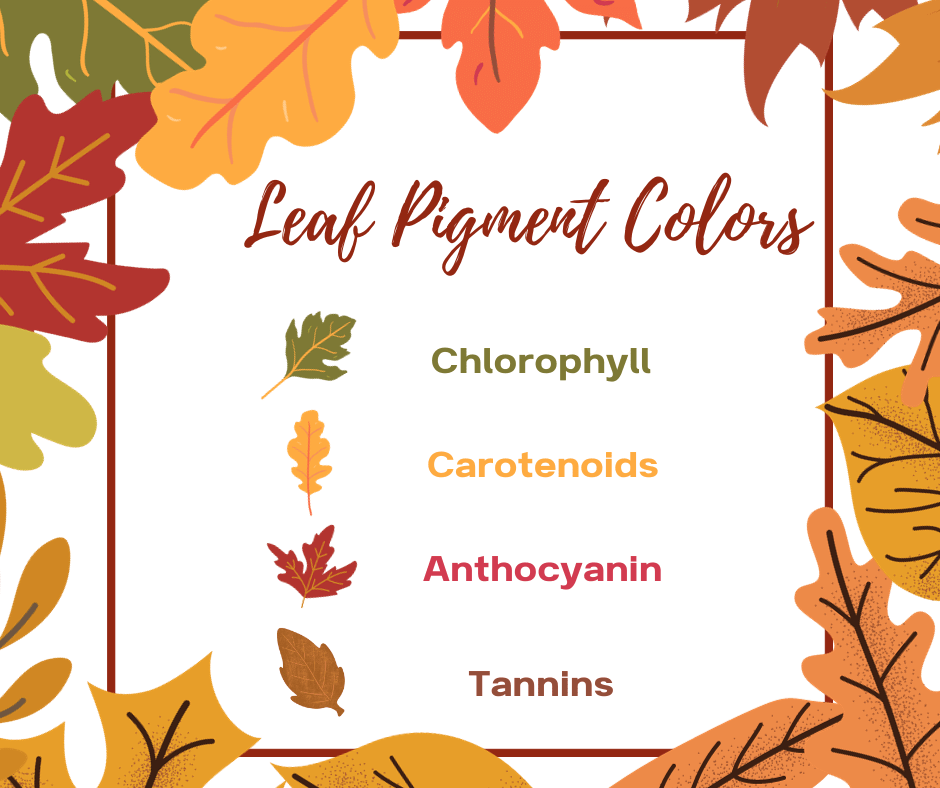
There are four main pigment colors:
- Chlorophyll, which makes the leaves green
- Carotenoids, which make the leaves yellow or orange
- Anthocyanins, which give leaves a red or purple hue
- Tannins, which make the leaves brown
WEATHER CAN IMPACT COLORS
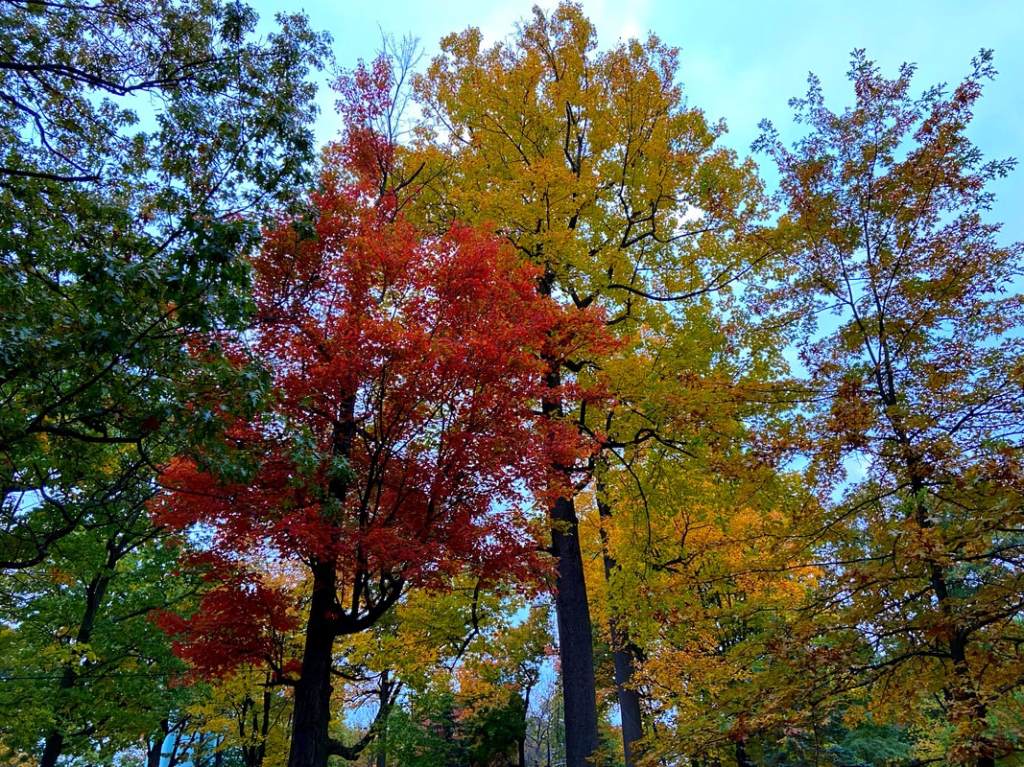
Several factors can impact the colors we see during the fall. We already discussed pigments, but there is also tree types, daylight, and my favorite factor… the weather!
Weather plays a crucial role in fall foliage brightness. A cold spring, long drought, or too much rain in the summer can all affect the colors and diminish their vibrancy.
So, what is the perfect weather to see the most vibrant fall foliage? A warm, wet spring and a seasonable summer set the stage. In the fall, we need warm, sunny days with cool nights.
Late in the season, factors like frost or strong winds can cause leaves to fall off the trees. Red and orange hues are typically more impacted by weather, while yellow hues are less impacted.
AVERAGE PEAK FOLIAGE
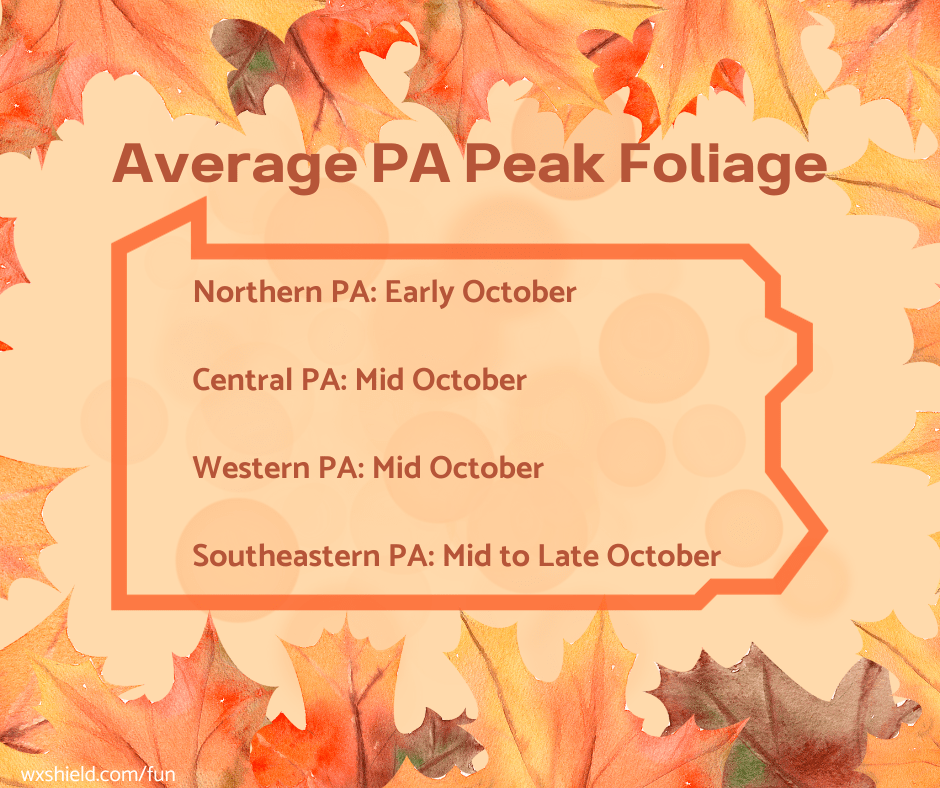
Now that we’ve explained why trees change color and what impacts their color, when is the best time to view fall foliage? It depends on where you live in Pennsylvania:
- Central Pennsylvania: Fall foliage is typically at its peak in mid-October. If you are at a higher elevation, it can peak earlier.
- South Central and Southeastern PA: Fall foliage usually reaches its peak from mid to late October.
- Northern PA: The earliest peak tends to be in the first few weeks of October.
THIS YEAR’S FOLIAGE REPORTS & FORECAST
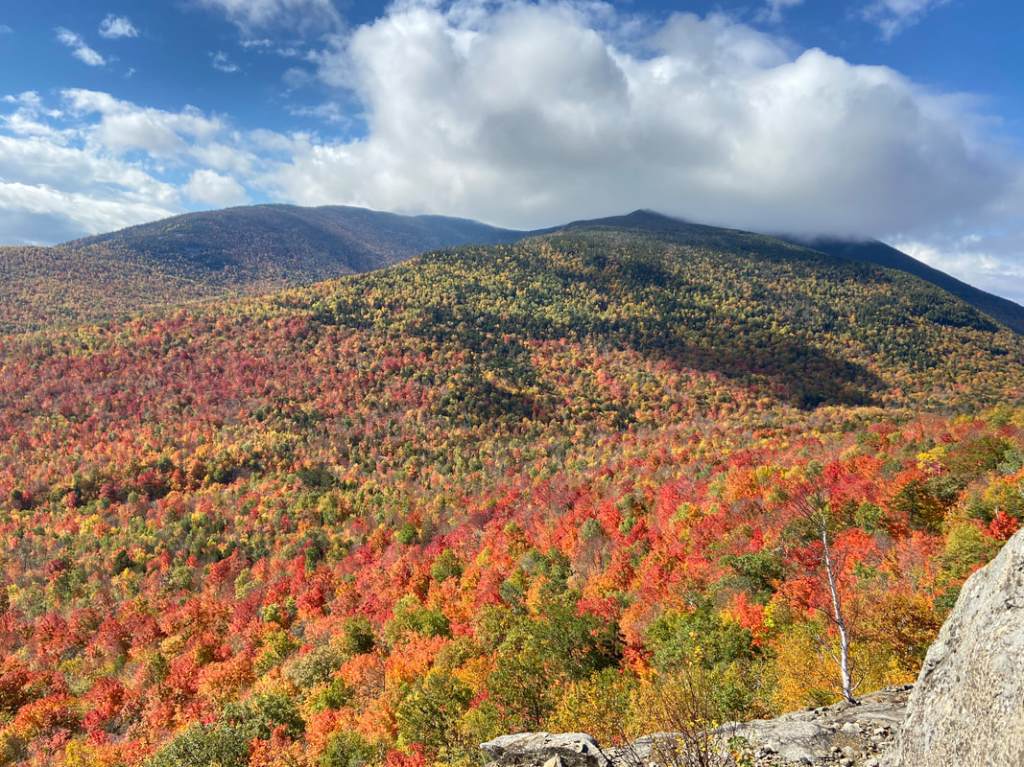
This year we did have a wet spring into early summer. Then it turned dry, maybe a little too soon, leading to drought conditions. However, so far this fall, we’ve had sunny days with cool nights, so I am interested to see if we end up with a great year, or because of the lack of the rain, we end up with less color and less vibrancy. Also, since we have been in a drought, we are already seeing leaves changing early. I would suspect we may see peak foliage early October instead of mid-October.
Where can you find the latest fall foliage map? The Pennsylvania Department of Conservation and Natural Resources posts weekly fall foliage reports.
Check out their website: DCNR Fall Foliage Report.
A fun fact I learned from the DCNR webpage is that there aren’t many places across the globe with deciduous forests where you can see fall foliage. Eastern North America, Northeastern China, Northern Japan, and parts of the British Isles and Northwestern Europe are among the few places to witness these vibrant fall displays!
Do you have a favorite place for leaf peeping? We love driving through the mountains in PA and the Adirondacks region of New York to see the most beautiful fall foliage!
 Wx Shield
Leave a comment