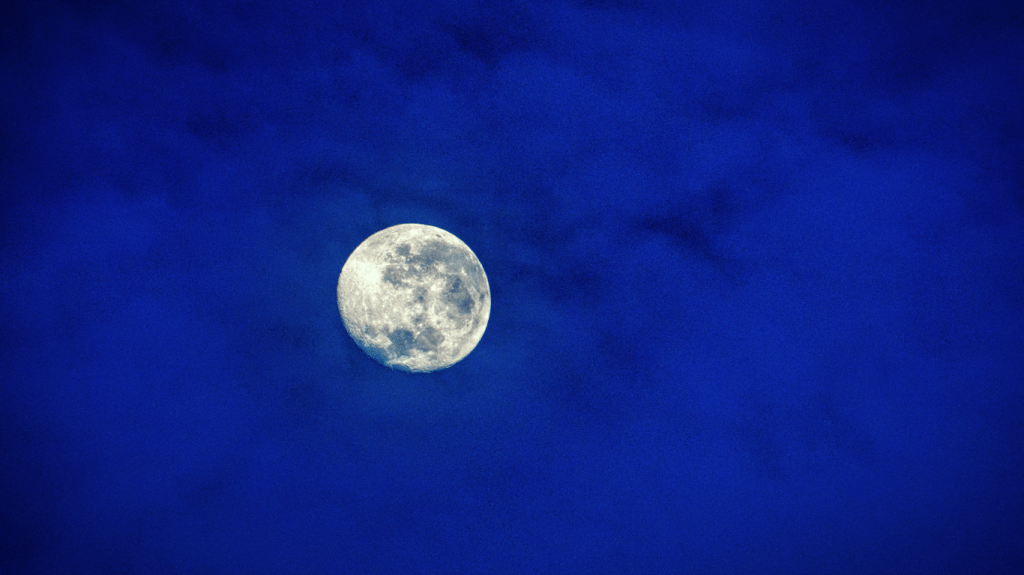
A Blue Moon. There are many songs referencing it, including Elvis Presley singing about it, and there is even a beer called Blue Moon, all stemming from the old saying “Once in a Blue Moon.” But what does that actually mean? Is the moon blue? It actually has some really interesting origins. The saying can be traced back hundreds of years!
No, the moon is not actually blue during a Blue Moon. Both definitions of a Blue Moon show just how rare the event can be, which connects back to the saying “Once in a Blue Moon.”
The more recent definition for a full moon to be designated as a Blue Moon is when two full moons occur within the same month. This happens about every 2–3 years, making it rare, but not extremely rare.
According to Sky & Telescope, one of the earlier meanings of a Blue Moon comes from the Maine Farmer’s Almanac. In this definition, a Blue Moon was determined based on when the spring equinox occurred and how the dates of Easter and Lent were calculated. This meant that when a season contained four full moons, the third full moon was considered a Blue Moon.
It is believed that inaccurate reporting is how we ended up with the modern definition, and since it is easier to remember, it stuck! Today, both Blue Moon definitions are accepted.
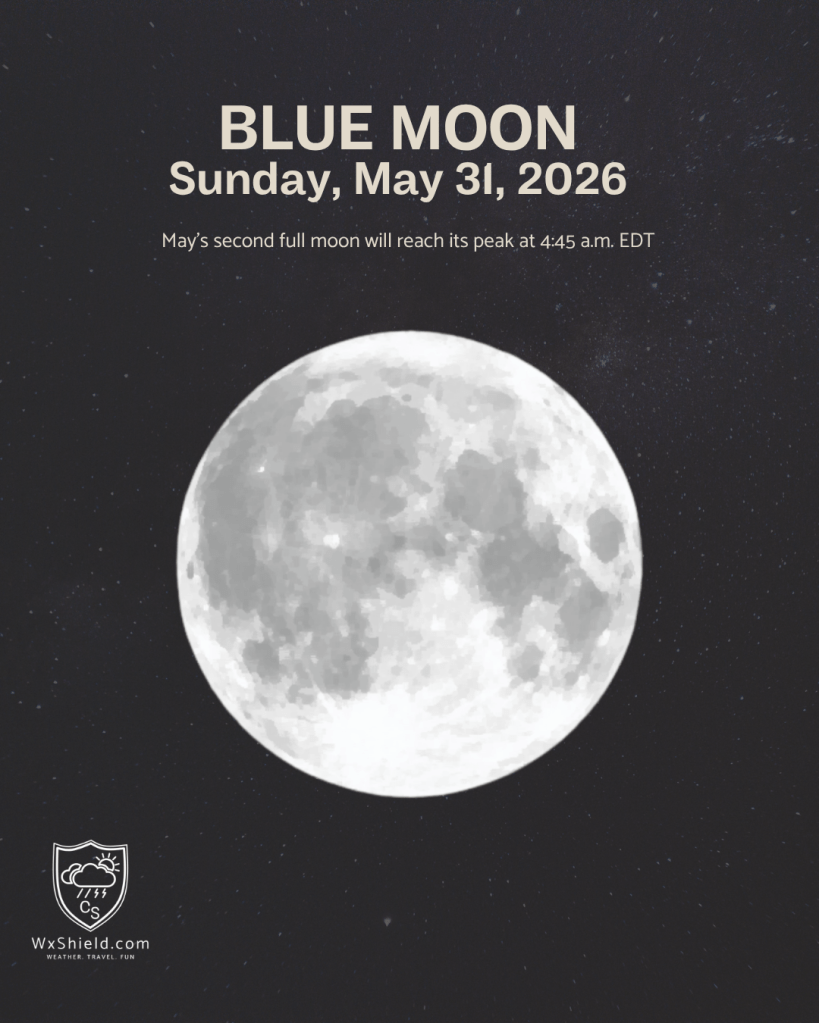
We will see a Blue Moon coming up on Sunday, May 31. We had a full moon on Friday, May 1, at 1:23 p.m. EDT. The Blue Moon will reach its fullest point at 4:45 a.m EDT. on Sunday, May 31. Let’s hope for clear skies to view it!
The only time we typically see the moon change color is during a lunar eclipse, when it can appear to have a reddish hue.
Also coming up is the Summer Solstice, happening on June 21 at 4:24 EDT, which marks the point when the northern hemisphere begins seeing less daylight hours for the remainder of the year.
Sources:
skyandtelescope.org


Leave a Reply